

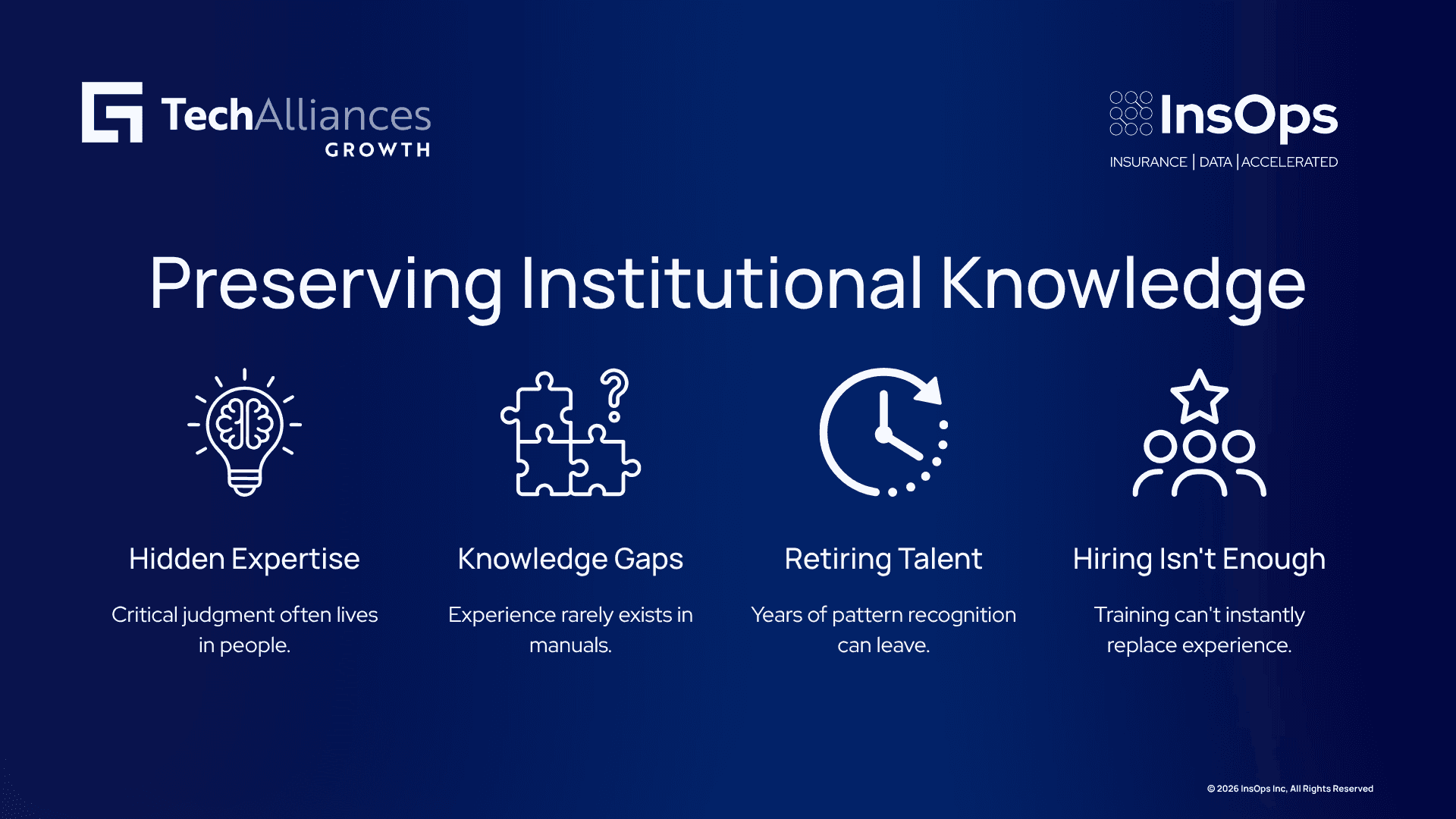
An estimated 400,000 insurance professionals are expected to retire by the end of 2026. Every one of them takes years of pattern recognition and judgment with them.
For a claims team, that's not an abstract workforce statistic. It's the difference between a newer adjuster who has to guess and one who has something real to check against.
What Actually Walks Out the Door When an Expert Retires
It's rarely written down anywhere. Underwriting judgment, claims handling instincts, and regulatory nuance mostly live inside people who've been doing the work for years.
As Vertafore's Chief People Officer Kristin Nease put it, carriers have to think hard about "what is leaving that isn't written down." Most of it was never in a manual to begin with.
That's what makes it hard to replace through hiring alone. A new hire can be smart and well trained and still lack the years of pattern recognition that made a retiring adjuster fast and reliable.
Where AI Can Help, and Where It Can't
The honest answer, according to the carriers and leaders discussing this problem, is that AI can't replace the judgment an experienced adjuster brings.
What it can do is help surface the information that already exists, faster. Critical knowledge is often scattered across systems, inboxes, spreadsheets, and individual memory. Tools that pull that together and put it in front of someone at the right moment can meaningfully shorten ramp time.
The distinction matters: this is about scaling judgment, not replacing it. A newer adjuster still makes the call. The tool's job is to make sure they're not making it with less information than a 20-year veteran would have had.
What This Looks Like in Practice
Carriers exploring this space are generally focused on a few concrete things:
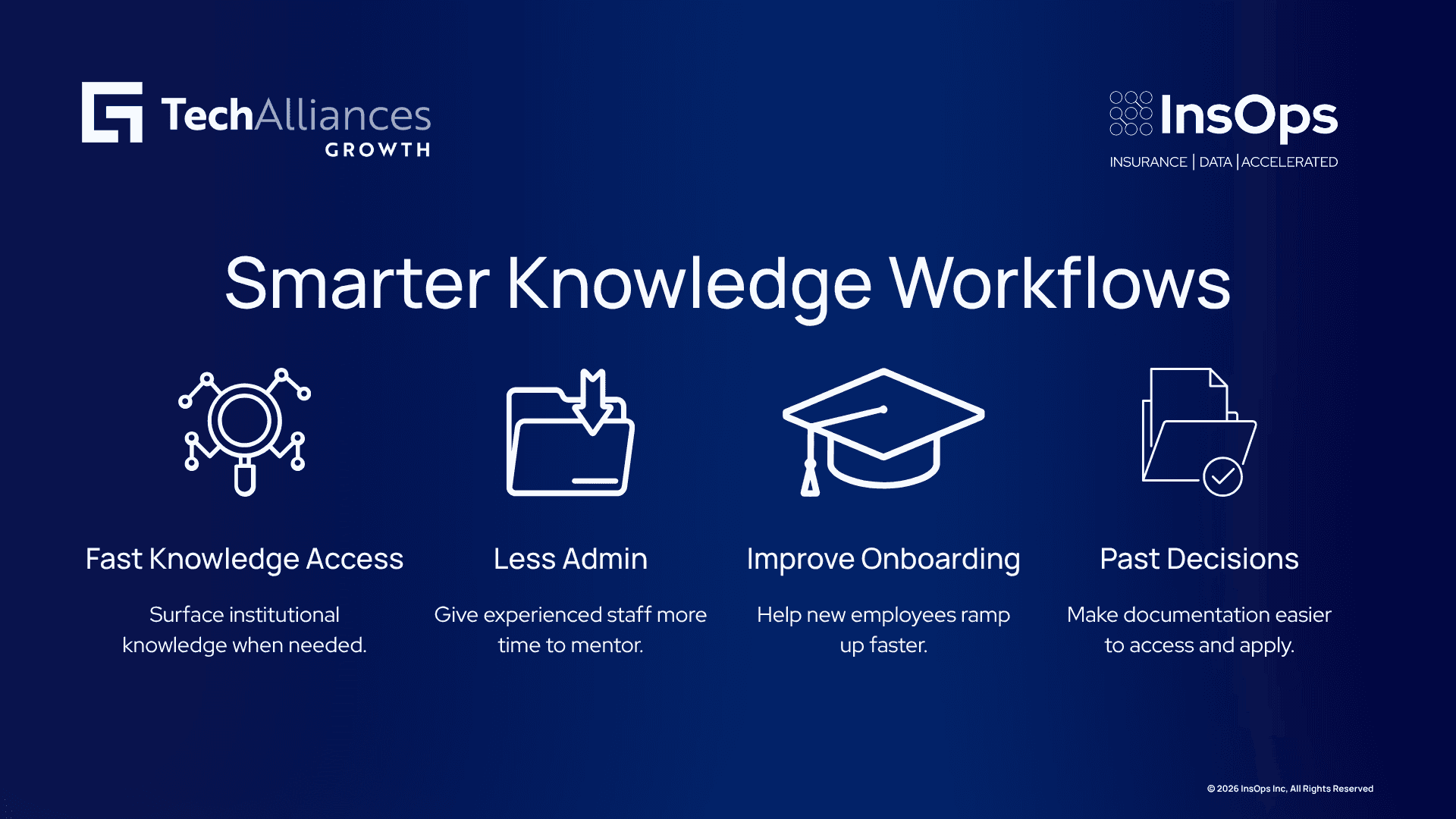
Surfacing institutional knowledge faster, instead of leaving it buried in someone's inbox or memory.
Reducing repetitive administrative work so experienced staff have more time to mentor.
Improving onboarding so newer employees ramp without overwhelming the people training them.
Making documentation and past decisions easier to find and apply consistently.
How InsOps Helps
InsOps is building toward this kind of capability inside LiLa: helping surface relevant past claims and organizational guidance for newer adjusters at the point they need it, so ramp time shortens and institutional knowledge doesn't leave when an experienced adjuster does.
This isn't a shipped feature today, and it wouldn't replace an adjuster's judgment, only put more of the organization's own knowledge in front of them. Contact us to talk through what this could look like for your team.
FAQ
Can AI replace the judgment an experienced adjuster brings?
No. The consistent view from carriers working on this is that AI can help surface information faster, but it doesn't replace years of pattern recognition and judgment.
Why is institutional knowledge hard to replace through hiring alone?
Most of it was never formally documented. It lives in the experience of people who've handled thousands of claims, not in a manual a new hire can read.
What does "scaling" institutional knowledge actually mean in practice?
Making existing knowledge, past decisions, and organizational guidance easier for newer staff to find and apply consistently, rather than requiring them to learn it the same slow way experienced staff did.