

A claim opens, gets a standard reserve, and then bumps up every time new information arrives. New medical records come in, the number moves. A demand letter lands, it moves again.
That stair-stepping isn't one adjuster's mistake. It's what happens when reserves are set from a rigid grid or first instinct instead of the full picture of the claim.
The Problem With How Reserves Traditionally Get Set
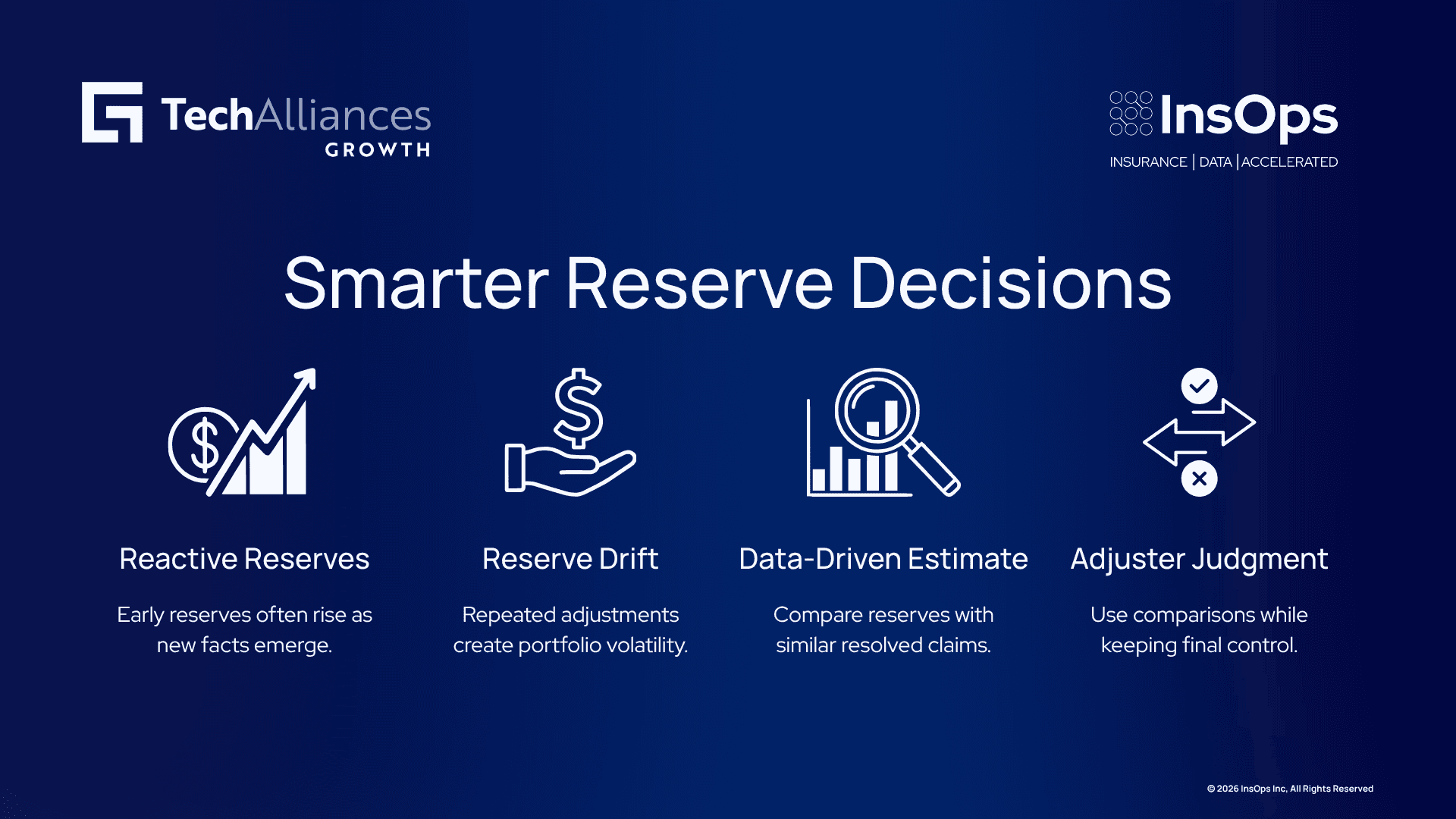
The traditional process is reactive by design. An examiner reviews the initial documents, sets a reserve based on limited information, and adjusts it later as the file develops.
That's a structural issue, not a people issue. As one industry piece framed it, this pattern is "a failure of the operating model, not the individual adjuster."
Why This Reserve Drift Matters Beyond One File
A reserve that keeps climbing isn't just a number problem on one claim. Across a whole portfolio, it creates volatility that shows up on the balance sheet.
It also affects timing. When a reserve only catches up to reality after a demand letter or a lawsuit, the negotiating position has often already shifted.
What Changes When Reserves Are Set From More Data, Earlier
The alternative isn't guessing less. It's giving the examiner a clearer comparison to draw from on day one, built from how similar past claims actually resolved.
That comparison can surface a reserve delta, showing where a current number and the pattern from comparable resolved claims diverge, along with the specific details driving that difference.
The Adjuster Still Makes the Call
This isn't about a model deciding a reserve. It's about giving the examiner something concrete to check their number against, instead of relying on instinct alone.
The examiner still reviews the file and sets the reserve. What changes is what they're looking at when they do it: a comparison to similar resolved claims, not just the documents in front of them today.
How InsOps Helps
InsOps is building toward this kind of capability inside LiLa: surfacing comparable historical claims to help inform reserve estimates and flag when a reserve may be drifting from what similar past claims suggest.
This isn't a shipped feature today, and it wouldn't set a reserve on its own. The adjuster reviews the comparison and makes the final call. Contact us to talk through what this could look like for your claims operation.
FAQ
Why do claim reserves often start too low and climb over time?
Reserves are typically set early, based on limited information, using a standard grid or an adjuster's initial read of the file. The number then gets revised upward as new information, like medical records or a demand letter, comes in.
Does a predictive model set the reserve instead of the adjuster?
No. The adjuster still reviews the file and makes the final reserve decision. A model can surface a comparison to similar resolved claims, but the adjuster decides what to do with it.
Why does reserve volatility matter beyond a single claim?
Across a full portfolio, reserves that keep climbing create unpredictability that affects financial reporting and capital planning, not just the outcome of one file.