

When two adjusters on the same team handle similar claims, the settlement numbers and reserve estimates don't always match. That gap is common, and it usually isn't about carelessness.
Most of the time it traces back to something more fixable: guidance, training, or tools that don't reach every adjuster the same way.
Why Do Different Adjusters Settle Similar Claims for Different Amounts?
Adjusters bring different levels of experience, training, and judgment to every file. Without a shared reference point, two reasonable people can read the same facts differently.
The pattern isn't random. Claims data across a team usually shows where guidance, training, or better tools would close the gap, not where individual adjusters are simply getting it wrong.
What Causes Inconsistent Claim Decisions at Insurance Companies?
The causes tend to fall into three buckets: people, process, and technology.
People: varying experience levels and inconsistent training across a team.
Process: decisions made without a consistent way to check them against similar past claims.
Technology: siloed systems that leave policy language and claim history somewhere an adjuster has to go dig for it, instead of in front of them.
Settlement amounts that fall outside normal ranges for similar claims are one of the clearest signals that this gap exists.
How Reserve Estimates Stay Consistent Across a Claims Team
When adjusters work from the same policy guidance and claim history instead of individual judgment alone, settlement decisions and reserve estimates become more consistent across a team.
That consistency doesn't come from adjusters trying harder. It comes from every adjuster having access to the same underlying information at the moment they need it.
Point-of-Decision Surfacing: A Different Way to Think About Consistency
One useful way to frame this: presenting relevant historical claims, policy language, and company guidelines to an adjuster at the exact moment they're setting a reserve or recommending a settlement, rather than leaving them to search for it or rely on memory and individual experience.
This shifts consistency from something enforced after the fact, in an audit, to something built into the decision itself.
Can AI Help Adjusters Apply Company Guidelines Consistently?
AI-assisted tools can surface policy language, past claims, and company guidelines at the point of decision, so settlement recommendations and reserves stay consistent across adjusters.
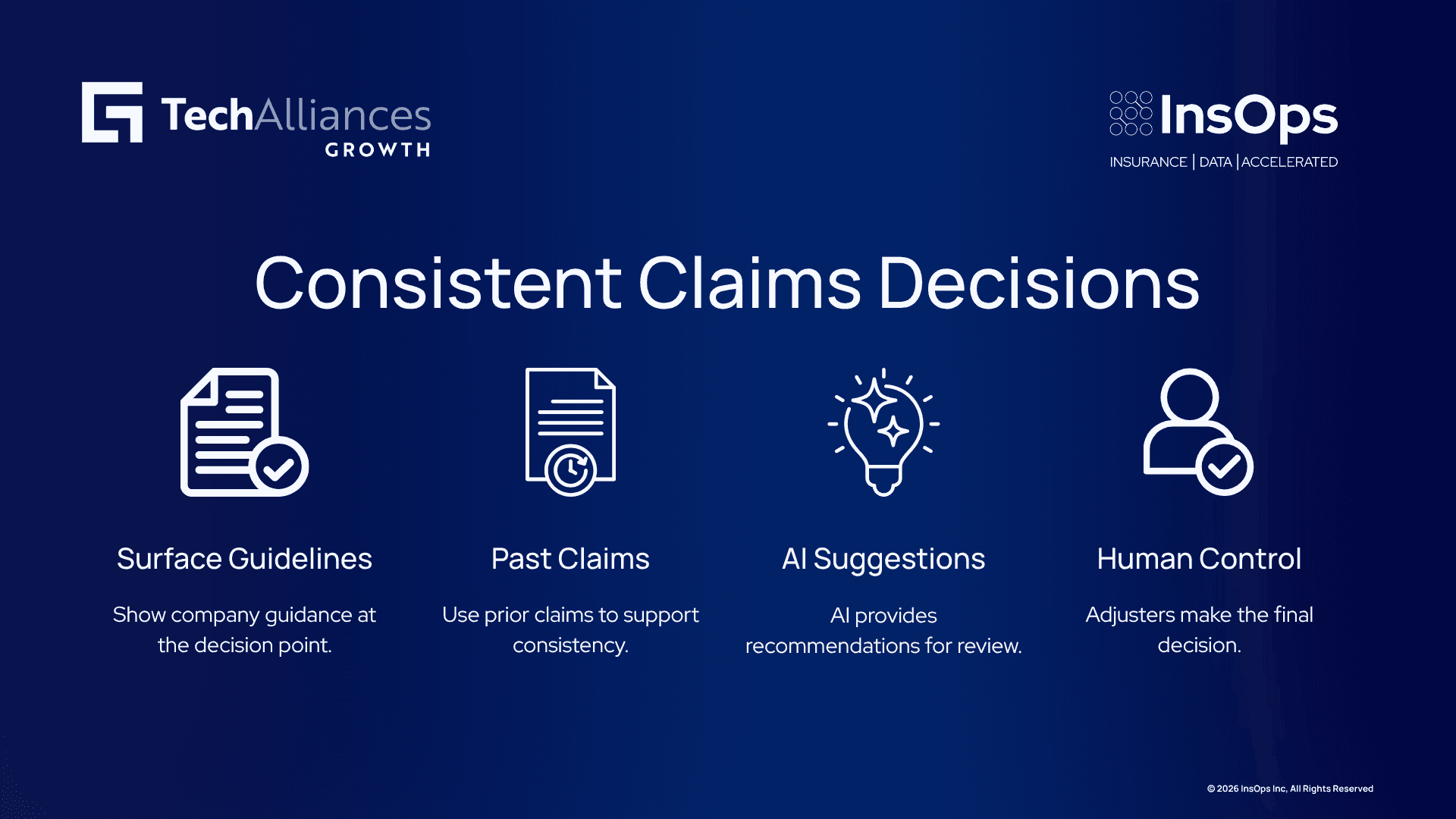
The distinction that matters here is who's doing the deciding. Tools built for this space present information and suggestions. The adjuster still reviews the file and makes the final call.
That human-in-the-loop step isn't a limitation. It's what keeps a decision defensible when a regulator, a policyholder, or opposing counsel asks how a number was reached.
How InsOps Helps
InsOps is building toward this kind of capability inside LiLa: surfacing historical claims, policy language, and company guidelines at the point of decision, so settlement recommendations and reserves stay more consistent across a team.
This isn't a shipped feature today. Contact us to talk through what this could look like for your claims operation.
FAQ
Why do different adjusters approach similar claims differently?
Different experience levels, different training, and no shared reference point at the moment of decision are the most common drivers. It's rarely one adjuster being careless.
What is decision noise in insurance claims?
It's a general term for unwanted variation in decisions that should be similar, given similar facts. Two adjusters seeing the same claim details but reaching different conclusions is a common example.
How would AI actually pull in past claims and policy language during a live claim review?
The general approach is presenting relevant historical claims and policy language to the adjuster right at the point they're making a decision, rather than requiring them to search for it separately.